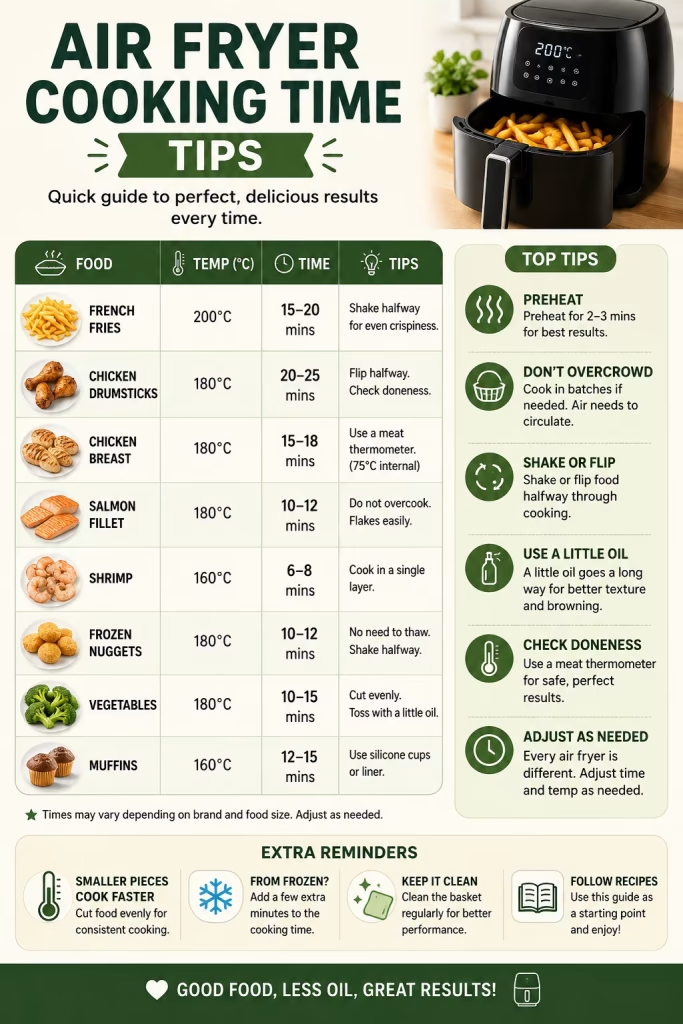
You’ve probably followed an air fryer recipe to the letter, set the timer exactly as instructed, and ended up with food that’s either burnt to a crisp or still raw in the middle. I know I have. Last week I found myself making air fryer salmon fillets according to a trusted recipe, only to pull them out overcooked and dry while my roommate’s identical batch (same time, same temperature) came out perfectly medium-rare.
Misunderstandings
I remember the moment clearly: I was trying to recreate that restaurant-quality air fryer salmon I’d seen online, complete with crispy skin and tender, flaky interior. As I cut into my overdone fillet, watching the dry, chalky flakes separate, I suddenly wondered if I was missing something fundamental about how air fryers actually work. Was the recipe wrong, or was I misunderstanding something about my specific appliance?
Temperature
Here’s what I discovered after testing multiple batches across different air fryer models: every brand of air fryer is different when it comes to temperature and airflow, which means recipe times are starting points, not gospel. The key isn’t blindly following instructions—it’s learning to read your food and adjust based on what you’re seeing, not just what the timer says.
Design
What actually happens is fascinating from an appliance engineering perspective. Air fryers don’t just heat air—they create specific airflow patterns through the combination of fan speed, heating element placement, and basket design. Two air fryers set to the same temperature can have vastly different heat transfer rates because of these design differences. One might blast hot air directly onto your food while another creates a more gentle, circulating flow—leading to significant differences in cooking speed even at identical temperature settings.
Heating Protocol
My coworker insisted that you just needed to “preheat longer” to compensate for model differences, citing his experience with a particular brand. But when we tested the same recipe (frozen French fries) across three different air fryers at their respective recommended preheat times, the results were all over the map. One batch came out perfectly crisp, another was soggy in the middle, and the third was burnt on the edges but raw in the centre—all despite following the same preheat protocol.
Thermometer
The problem isn’t what you think—it’s not about finding the one “true” cooking time for your air fryer. It’s about understanding that visual and textural cues are infinitely more reliable than clock-watching. That golden-brown colour you’re aiming for? It’s a better indicator than any timer. The internal temperature was measured with a quick-read thermometer. More trustworthy than guessing based on elapsed minutes.
Flip Time
Let’s talk about the “turn over” or flip time for a minute. I know it seems like a small detail, but checking your food at the halfway point is arguably the most important step in air fryer cooking. This isn’t just about preventing sticking—it’s your primary opportunity to assess progress and make course corrections before it’s too late.
Chicken Thighs
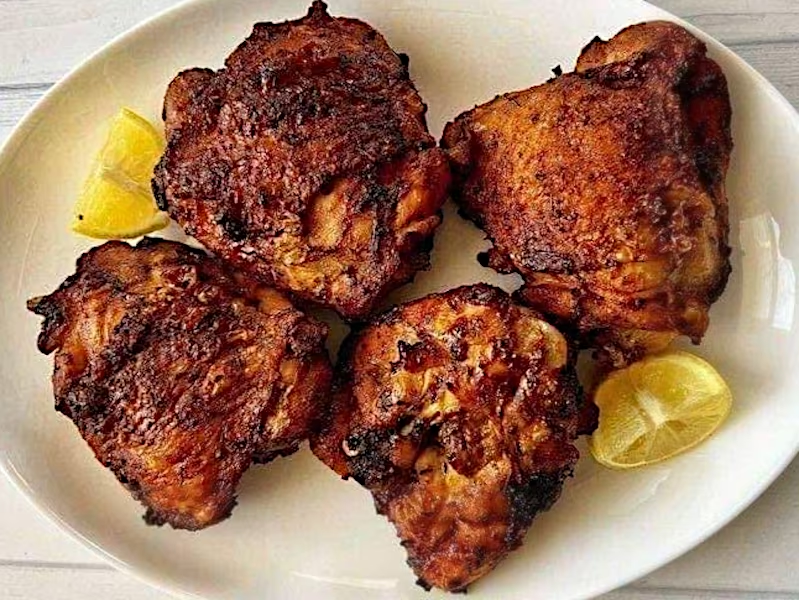
I learned this lesson the hard way after ignoring the flip time on a batch of air fryer chicken thighs. I set the timer for 25 minutes at 200°C, walked away to do other chores, and came back to find the bottoms beautifully crisped while the tops were pale and steamed-looking. When I flipped them at that point, I could see exactly how much more time the pale side needed—about 8 minutes instead of the full 12 I would have added if I’d waited until the end.
Cooking time
There’s also the carrying over factor to consider. Food continues to cook from residual heat even after you remove it from the air fryer, especially with dense items like meat or potatoes. I’ve pulled out what looked like slightly underdone pork tenderloin only to find it perfect after 5 minutes of resting, while other times I’ve left food in “just a minute longer” and ended up with overcooked results.
Grilling
But here’s the thing I still think about: that moment when I realised I’d been approaching air fryer timing all wrong. I’d been treating it like oven baking, where you set it and forget it, when it’s actually more like grilling—requiring active attention and constant adjustment. The air fryer isn’t a set-it-and-forget-it appliance; it’s a precision tool that rewards engagement.
Thank yourself
Your future self will thank you for treating recipe times as guidelines rather than rules. Not just because it prevents culinary disasters (though that’s a huge benefit), but because you’ll develop a deeper intuition for how your specific air fryer behaves with different foods. Next time you’re tempted to walk away and “let it cook,” remember: the best air fryer cooks aren’t the ones who follow timers religiously—they’re the ones who check, adjust, and trust their eyes more than their clocks.
Setting the timer
I used to think that if a recipe said “cook for 15 minutes at 200°C,” I should set the timer and return exactly when it dinged. This belief came from years of following conventional oven recipes where timing is relatively consistent across appliances. It wasn’t until I started using multiple air fryer models that I realised this transfer of knowledge was setting me up for frustration.
Salmon
The first time I tried making air fryer salmon according to a precise recipe (12 minutes at 200°C), I was preparing a quick weeknight dinner for myself. I had patted the fillets dry, seasoned them properly, and set up everything according to the instructions. I set the timer, walked away to chop vegetables, and returned when it alarmingly beeped. What emerged disappointed me greatly—the salmon was overcooked, with dry, chalky flakes and zero translucency in the centre.
Appliance Inconsistency
Most recipes give specific time and temperature combinations without acknowledging the significant variability between air fryer models, leaving countless home cooks blaming themselves for “doing it wrong” when the real issue is appliance inconsistency. This vagueness causes needless waste and frustration as people repeatedly overcook or undercook food while following instructions to the letter.
Test Kitchen
What I discovered through systematic testing is that successful air fryer cooking relies on three key adjustments: visual cues (colour and texture), temperature verification (when possible), and progressive time adjustment based on observation. Instead of thinking in fixed minutes, we’re working with ranges and checkpoints: start with the recipe time as a guideline, check at the halfway point, then adjust in 2-3 minute increments based on what you see.
Checkpoint
Here’s a surprising detail I wish I had known sooner: the ideal “checkpoint” time varies significantly by food type and thickness. For thin items like fish fillets or vegetables, check at 1/3 of the estimated time. For thicker items like chicken breasts or pork chops, check at the halfway point. For very dense items like whole potatoes or meatloaf, you might need to check at 1/4 and 1/2 intervals to make fine adjustments.
The problem isn’t what you think—it’s not about achieving perfectly uniform doneness from edge to centre. It’s about understanding that some variation is natural and even desirable in air frying, where the exterior crispness and interior tenderness create a pleasing textural contrast. What matters more is avoiding the extremes—burnt exteriors with raw interiors or uniformly grey, overcooked results.
Limitations
Let’s get real about limitations: this attentive approach isn’t for everyone or every situation. If you’re cooking for a large family and need to prepare multiple batches back-to-back, the constant checking might feel too tedious. Also, if you’re using accessories like racks or skewers that block visibility or make flipping difficult, you might need to rely more on time estimates and internal temperature checks.
Food Safety
There’s also the matter of food safety to consider. While visual cues work well for many items, with proteins like chicken or pork, internal temperature is the ultimate arbiter of doneness and safety. No amount of golden-brown colour guarantees that the chicken has reached a safe 75°C/165°F internal temperature.
Sunday Afternoon
But here’s the thing I still think about: that Sunday afternoon when I served perfectly cooked air fryer salmon to my sceptical roommate. I had started with the recipe’s 12-minute suggestion but checked at the 4-minute mark (1/3 time for thin fish), flipped at 6 minutes, and pulled them out at 10 minutes when the flesh was opaque but still moist-looking and flaked easily with a fork. When they took that first bite—the moist, tender interior giving way to the crispy, seasoned exterior—they admitted they couldn’t believe it was made in an air fryer and asked for my “secret.”
Engagement
The real beauty of flexible timing in air frying lies in how it transforms our relationship with this appliance. By accepting that perfection requires engagement rather than blind trust in timers, we move from frustrated recipe-followers to confident, adaptive cooks who understand their tools. It’s not about lowering standards—it’s about applying them where they actually matter: in the food on your plate, not the numbers on your display.
Pause
Next time you’re standing in front of your air fryer with a timer set, pause for a moment. Ask yourself whether you’re willing to walk away and trust the clock or if you’d rather check, adjust, and engage with the process. Then trust your eyes more than your timer: look for that golden-brown colour, assess the texture, and remember that you can always add time but you can never take it away.
Guidelines
Your future self will thank you for treating recipe times as guidelines rather than rules. Not just because it prevents culinary disasters (though that’s a huge benefit), but because you’ll develop a deeper intuition for how your specific air fryer behaves with different foods. Next time you’re tempted to walk away and “let it cook,” remember: the best air fryer cooks aren’t the ones who follow timers religiously—they’re the ones who check, adjust, and trust their eyes and sense of smell more than their clocks.