What Is a Pickle?
A pickled cucumber.
That’s the Wikipedia definition. Simple. Clean. Wrong for anyone actually standing in a supermarket aisle trying to decide between three jars that all say “pickle” but contain completely different things.
The word “pickle” is a category masquerading as a single item. In the US, it means dill pickle. In the UK, it means “depends on the sandwich.” In a technical sense, it means any vegetable preserved in an acid, such as vinegar. The confusion isn’t accidental. It’s built into how the language evolved on both sides of the ocean.
The night I learned the hard way
Six months ago, I was writing a recipe for air fryer burgers. I wrote “add pickle slices”, thinking it was universal. A British reader commented, asking if they should use Branston. An American reader asked if sweet relish counts. A third person asked what a cornichon is. Same word. Four different ingredients. That comment thread became this article.
Question
Here’s a question people always ask. What is a pickle actually? The answer changes based on where you grew up and what you’re putting it on.
The broad definition that helps nobody
Technically, a pickle is any vegetable or fruit preserved in brine or vinegar through lacto fermentation; Cucumbers, Onions, Eggs, Beetroot, Cabbage, Mango, Lime. They’re all pickles. This definition is factually correct and practically useless. When a recipe says “one pickle”, you need to know which one.
British English
In British English, “pickle” without qualification often means a sweet mixed vegetable chutney. Branston is the market leader, but every supermarket has its own brand version. Swede (Rutabaga), carrot, onion, and cauliflower in spiced vinegar syrup. This is what goes in a ploughman’s lunch. This is what goes in a cheese sandwich.
American English
In American English, “pickle” without qualification means a dill pickle. Cucumber. Vinegar. Dill. Garlic. Maybe mustard seed. Spears slices chips whole. That’s the default. Sweet pickles exist, but they’re labelled “bread and butter” or “sweet pickle” specifically.
The gherkin complication
A gherkin is a small cucumber variety. Cucumis sativus is harvested young. Typically two to four centimetres. Knobbly skin. In the UK, “gherkin” on a jar means whole or halved small cucumbers in vinegar brine. Often with dill. Sometimes with mustard seed. In France, they’re cornichons. Same thing. Different word.
But here’s where it gets messy. In British supermarkets, “burger pickles” are sliced gherkins. The label says pickle. The contents are gherkins. The slices on your McDonald’s burger are gherkins. The slices on your Wetherspoons burger are gherkins. Nobody calls them gherkins on the menu. They call them pickles.
What actually happens is the word shifts based on the format. Whole jar labelled gherkins. Sliced jar labelled burger pickles. Same vegetable. Different cut. Different label.
The Branston category error
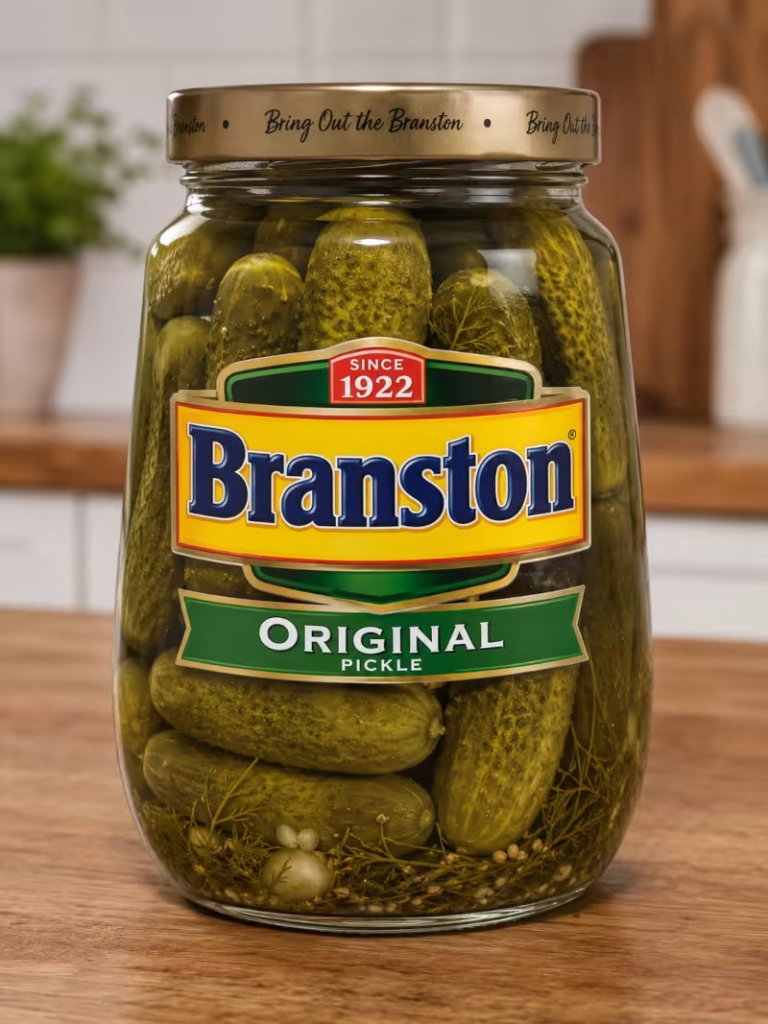
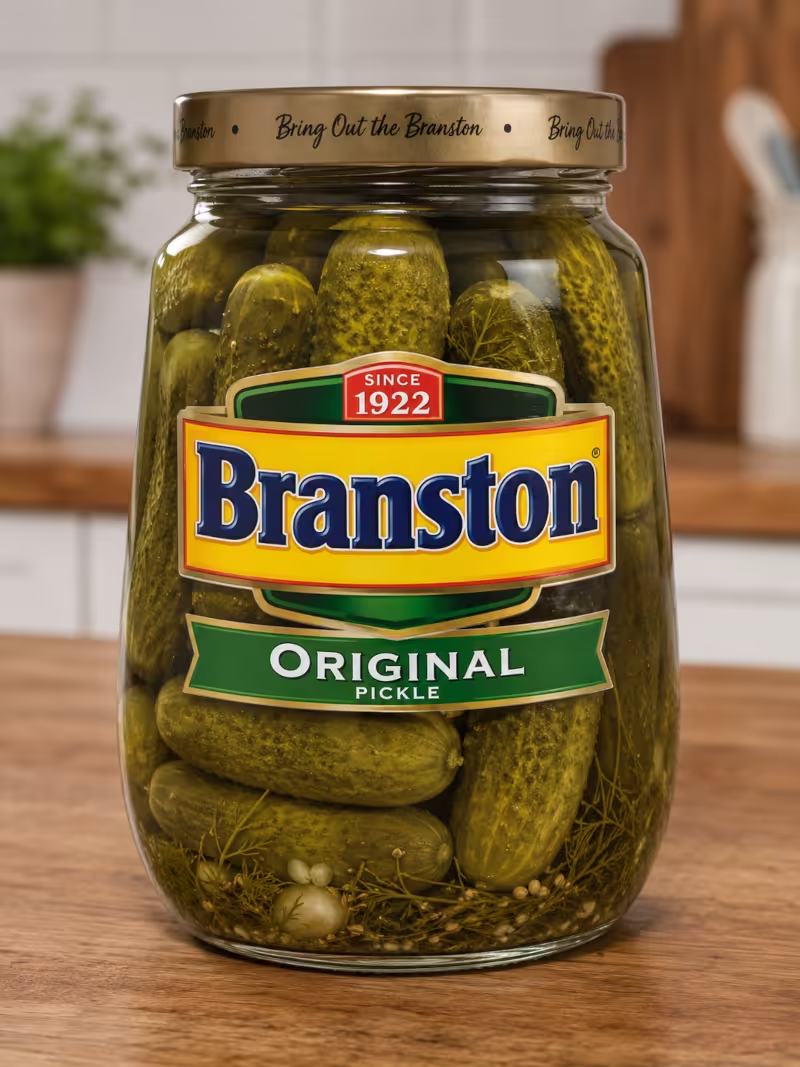
Branston pickle contains no cucumber. Zero. but does contain Swede (Rutabaga), Carrot, Onion, Cauliflower, Dates, Vinegar, Sugar and Spices. It is a chutney. A sweet pickle. A mixed vegetable pickle. But when a British person says “cheese and pickle sandwich”, this is the only correct answer.
Put Branston on a burger, and you’ve made a category error. The sweet spice fights the beef. The texture clumps. The vinegar doesn’t cut the fat. It’s not wrong because it tastes bad. It’s wrong because it’s the wrong tool for the job. Like using jam on a steak.
Double-duty problem
The problem isn’t what you think. People know Branston isn’t a gherkin. They just don’t have a separate word for “the default pickle thing that goes on this specific sandwich.” So “pickle” does double duty.
The American spectrum
Americans have a more specific vocabulary. Dill pickle. Kosher dill. Half sour. Full sour. Bread and butter. Sweet pickle. Relish. Hamburger dill chips. Each name tells you the cut, the brine, the flavour profile. The word “pickle” alone still defaults to dill, but the modifiers exist.
In the UK, the modifiers are mostly absent from everyday speech. You get “gherkin”, “pickle”, “Branston”, “pickled onion” and “piccalilli.” The vocabulary is thinner. The context carries more weight.
My coworker tried to order a “dill pickle” at a London deli. The server stared blankly. “We have gherkins.” “But dill pickle?” “Love. It’s a gherkin. With dill in the jar.” The brine is the same. The cucumber is the same. The label is different.
The air fryer test
Air fryer burger. 180°C. Eight to ten minutes. Flip halfway. Cheese last minute. You need acid. You need crunch. You need vinegar snap to cut the fat. Sliced gherkins. Dill pickle chips. Burger pickles. Same thing. Different jars.
Do not use Branston. Do not use sweet relish. Do not use pickled onions (unless you’re making a specific onion burger). Do not use piccalilli. The flavour profile fights the beef.
Test Kitchen
The first pickle I ever fermented myself was a disaster. Too much salt. Not enough weight. The cucumbers floated. Mould formed. I threw the jar out. The second batch worked. Three per cent brine. Garlic, Dill, Mustard seeds, Bay leaf, then two weeks at room temperature. The result was better than any jar I’ve bought. But it was still just a dill pickle. A gherkin if I’d used smaller cucumbers. The word didn’t change the flavour.
What to buy for what guide
| Use case | Buy this | Label might say |
|---|---|---|
| Burger (UK/US) | Sliced gherkins / dill chips | Burger pickles, hamburger dills, sliced gherkins |
| Ham sandwich (UK) | Branston or sweet pickle | Sandwich pickle, Branston, sweet pickle |
| Cheese board (UK) | Whole gherkins or cornichons | Gherkins, cornichons, baby gherkins |
| Hot dog (US) | Sweet relish or diced dill | Relish, sweet relish, hamburger relish |
| Ploughman’s (UK) | Branston + pickled onions | Branston, mixed pickle, ploughman’s pickle |
| Snacking | Whole dill pickles | Dill pickles, kosher dills, garlic dills |
Save this table. Next time you’re in the condiment aisle, you’ll know exactly which jar matches your meal. The word on the front matters less than the use case in your head.